market making
Every story this desk has filed under market making, most recent first.
Tokenized equity venues look like exchanges but mostly are not. Understanding whether you are facing a hedged market maker, an issuer's inventory, or an automated pool explains almost every strange price you will ever see on one.
The launch system behind Bundle Cat will let teams sell a share of a token's opening bundle before it launches, with the supply locked and the buyers paid in fees. A tradable launch curve and a curator program for VCs and incubators come in the same release. On Mosh's own figures, 83 percent of its coins are still trading two weeks after reaching the pool, against 6 percent of comparable Pons coins.
A tokenised share trades every minute of the week. The share itself trades for about 32 hours of it. The gap between those two facts is the whole business of overnight market making, and it is paid for in the spread.
A tokenized equity only trades as well as somebody's balance sheet allows. This is a walk through the three kinds of market maker standing behind an onchain share, the hedge each one runs, and the hours when all of them step back.
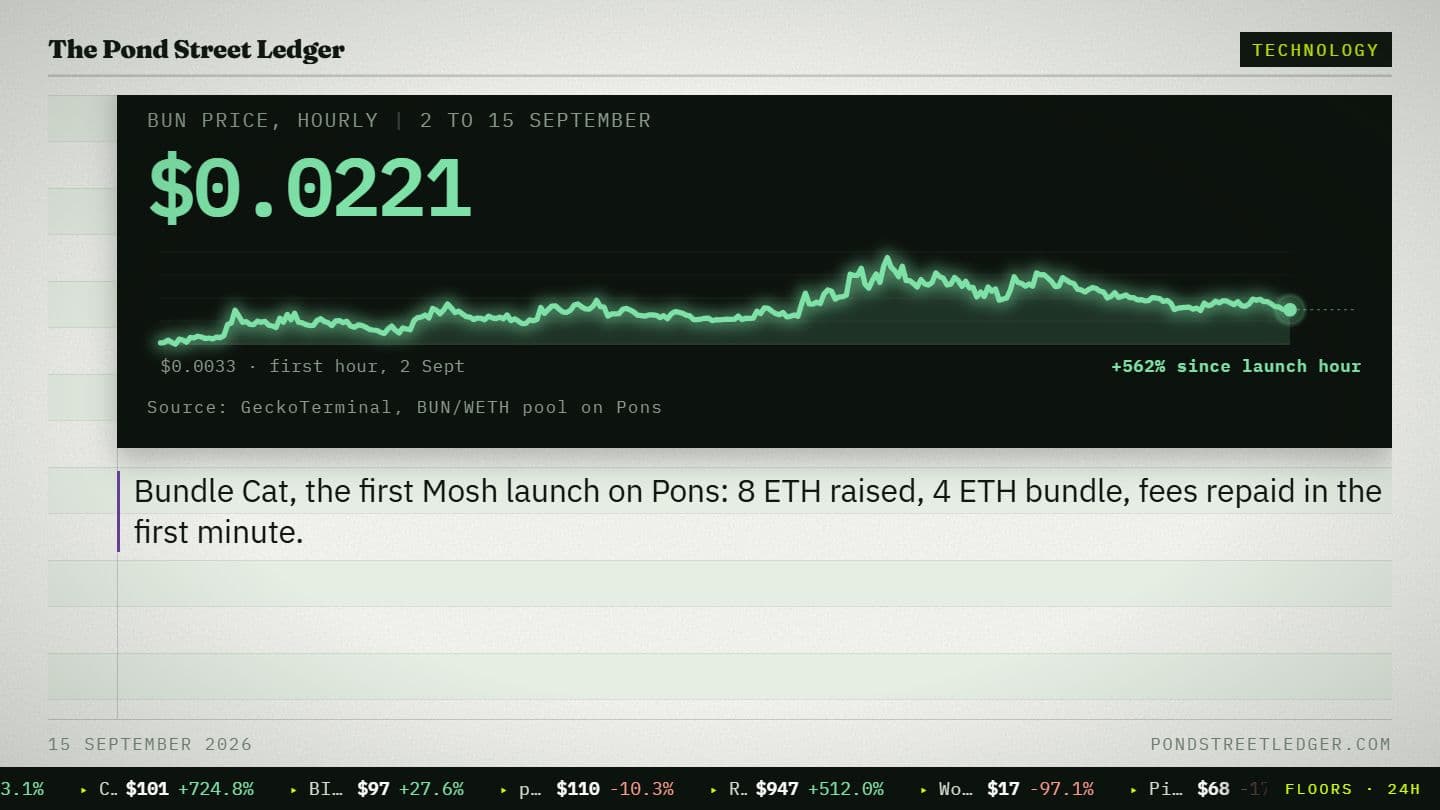
The Bundle That Cannot Sell: How Mosh Turned Bundle Cat's Launch Wallets Into Its Market Maker
Bundle Cat, the first token launched through Mosh on Pons, filled an 8 ETH raise, earned it back in fees within a minute and locked about 72 percent of its supply in vaults that AI agents trade but cannot empty. The team has published how the system works and what it plans to do with the fees.
The equity market is closed for roughly two thirds of the week, but the token is not. Someone has to quote a price with no hedge available, and the way they cover that risk is the whole cost of 24/7 trading.
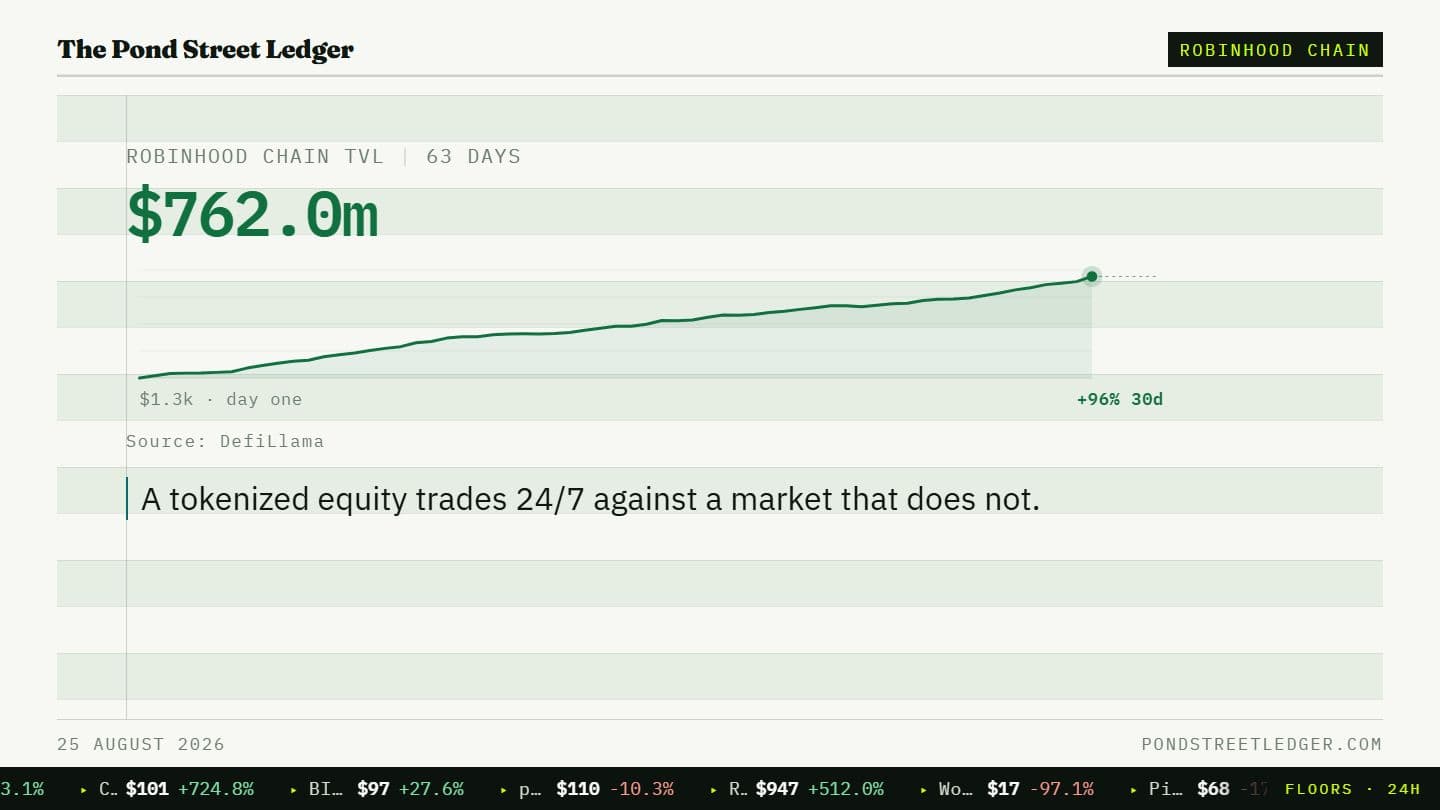
Who Actually Provides Liquidity for a Tokenized Stock, and What Happens at 4pm
A tokenized equity trades 24/7 against a market that does not. This explainer walks through who quotes it, how they hedge, and why spreads widen the moment the underlying venue closes.